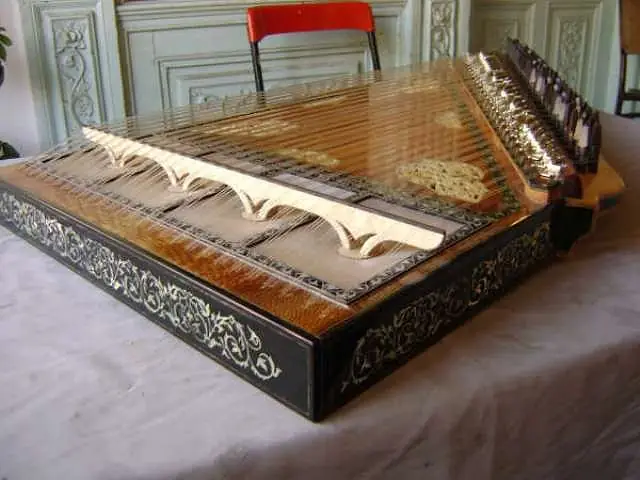
History of the qanun
Origins
The qanun belongs to the family of plucked zithers. Its name is generally traced to the Greek kanōn, by way of Arabic.
The Islamic world
It took its place in Arab and Persian music during the Middle Ages. Legend credits al-Farabi with its invention, though this is not established.
Ottoman period
Known in early Ottoman music, the qanun spread again in the 19th century. Kanuni Hacı Arif Bey was among the noted players of the period.
Mandals
The small levers that change string length became established in the 20th century, letting players set the pitches of a makam while playing.
Today
Each note has three strings; our qanuns have 72 in all. It is played with plectra held by rings on both index fingers.